-
tel:
+8613770272989
-
email:
admin@trimbleglobe.com

Factors that may affect the processing of industrial ceramics
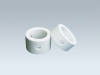
Factors that may affect the processing of industrial ceramics
Processing will be affected by different processing techniques, different processing methods, but also the impact on the product parts.
Industrial ceramics have different efficacy and a wide range of applications, such as the application of high wear resistance, high abrasion resistance of pottery to the production and processing of mechanical parts, seals, CNC blades and other raw materials, the application of high wear resistance, high toughness and super wear-resistant pottery to the production and processing of small cars with anti-wear, lightweight prefabricated components, heat-resistant thermal insulation prefabricated components,, piston rod top, mold guide pillars, etc., the use of corrosion resistance, and biological bacteria touching organic chemistry Good reliability of the porcelain to produce manufacturing treatment crucible, heat exchanger, biotechnology, such as dental artificial service paint bone, etc., the use of capture and digestion of neutron porcelain to produce a variety of nuclear reactor structure raw materials.
Because of the characteristics of heat resistance, corrosion resistance, high toughness, etc., it is used for pouring steel sliding spout, smelter rare and precious heavy metals, special aluminum alloys, high-purity metal materials, laminated glass metal drawing clamp pot and container; various high-temperature furnaces, such as refractory insulation materials, porcelain, ironmaking blast furnace lining (wall and tube); physicochemical containers, ignition coils, high-temperature resistance and oxidation resistance plating. 0.5 of low silicon calcined steel jade brick is carbon black, boron chemical plant, organic fertilizer, ammonia reaction furnace and vaporization furnace special type of furnace charge.
Industrial ceramic dense mechanical processing belongs to the depth of processing in mechanical processing manufacturing, according to the temperature of the steel parts being produced and processed in the case, divided into cold drawing and heat treatment.
Generally processed at room temperature, and does not cause chemical or physical phase changes in the workpiece, called cold processing. Generally processed at a state higher or lower than room temperature and will cause chemical or physical phase changes in the workpiece, called thermal processing. Cold processing can be divided into cutting and pressure processing according to the differences in processing methods. Thermal processing is commonly heat treatment, calcination, casting and welding.
Related News

.png?x-oss-process=image/resize,w_100/quality,q_100)




Contact US
Product Information
Quantity
Unit
Piece
Support order samples, customization, wholesale direct, and complete payment. If the product you look for does not have corresponding customized content, pls fill out the form below to contact us, and we will reply ASAP.