-
tel:
+8613770272989
-
email:
admin@trimbleglobe.com

Three Effects of Infrared Heat Radiation Projected to Objects
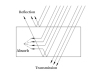
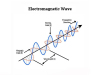
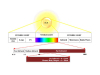
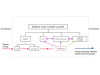
When infrared thermal radiation is projected on an object, it follows the law of visible light, in which part of the heat ray is absorbed by the object, part is reflected, and the rest penetrates the object.
Suppose the total energy transmitted to the object in the full wavelength range is φ, absorbed by φα, reflected by φρ, and penetrated by φτ, according to the law of energy conservation:
φα+φρ+φτ=φ
Divide both sides of the equation by φ at the same time to get:
α+ρ+τ=1
In the formula, α is the absorptivity of the object, ρ is the reflectance of the object, and τ is the transmittance of the object.
If the object can absorb all external rays, that is, α=1, this object is called a black body; if the object can reflect all external rays, that is, ρ=1, this object is called a white body; if the object can pass through all external rays, That is, τ=1, this kind of object is called transparent body.
In nature, absolute black bodies, white bodies and transparent bodies do not exist, and most objects are in between, collectively called gray bodies. For example, α≈0.95 for high-quality ceramics, and ρ≈0.98 for highly polished pure gold. The ability of a gray body to absorb, reflect and transmit radiant energy depends on the properties of the object itself, surface roughness, temperature, and the wavelength of the heat source radiation.
Related News

.png?x-oss-process=image/resize,w_100/quality,q_100)

Contact US
Product Information
Quantity
Unit
Piece
Support order samples, customization, wholesale direct, and complete payment. If the product you look for does not have corresponding customized content, pls fill out the form below to contact us, and we will reply ASAP.